Warning: Redis::get(): php_network_getaddresses: getaddrinfo for localhost failed: Name or service not known in /home/solveddoc.com/public_html/wp-content/plugins/litespeed-cache/src/object-cache.cls.php on line 674 Home - Page 10 of 15 - Solveddoc
How to resolve 404 error from website internal pages on LiteSpeed/Cyberpanel?
Some time you face 404 error on all internal pages of your website. This often happened when you move your website from one server to any other or change any internal configurations. Here in this article we will tell you How to resolve 404 error from website internal pages on LiteSpeed Cyberpanel.
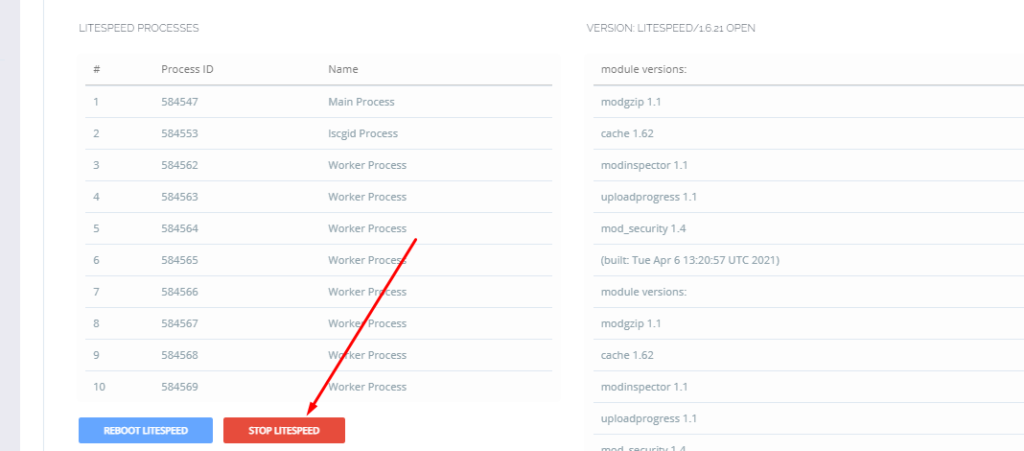
Without going deep let me tell you the reason for this. This happened due to the permissions or the rewrite rules. As after changes Open litespeed need a restart.
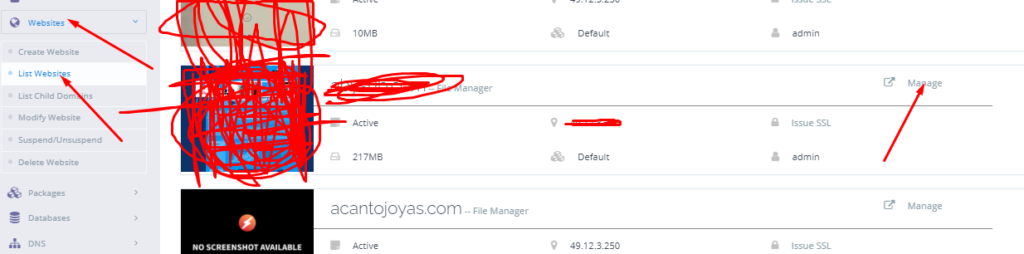
To resolve 404 error from website internal pages on LiteSpeed/Cyberpanel we just have to do 2 steps.
Free Minecraft Pocket Edition APK for Android. Minecraft is a game about placing blocks and going on adventures.
Explore infinite worlds and build everything from the simplest of homes to the grandest of castles. Play in creative mode with unlimited resources or mine deep into the world in survival mode, crafting weapons and armor to fend off dangerous mobs. Create, explore and survive alone or with friends on mobile devices or Windows 10.
EXPAND YOUR GAME: Marketplace – Discover the latest community creations in the marketplace! Get unique maps, skins, and texture packs from your favorite creators.
Slash commands – Tweak how the game plays: you can give items away, summon mobs, change the time of day, and more.
Add-Ons – Customize your experience even further with free Add-Ons! If you’re more tech-inclined, you can modify data-driven behaviors in the game to create new resource packs.
MULTIPLAYER Realms – Play with up to 10 friends cross-platform, anytime, anywhere on Realms, your own private server that we host for you. Try a free 30-day trial in-app.
Multiplayer – Play with up to 4 friends with a free Xbox Live account online. Servers – Join free massive multiplayer servers and play with thousands of others! Discover gigantic community-run worlds, compete in unique mini-games and socialize in lobbies full of new friends!
This article will discuss the CyberPanel features list. All the features discussed in detail. This CyberPanel features list has all the features CyberPanel has.
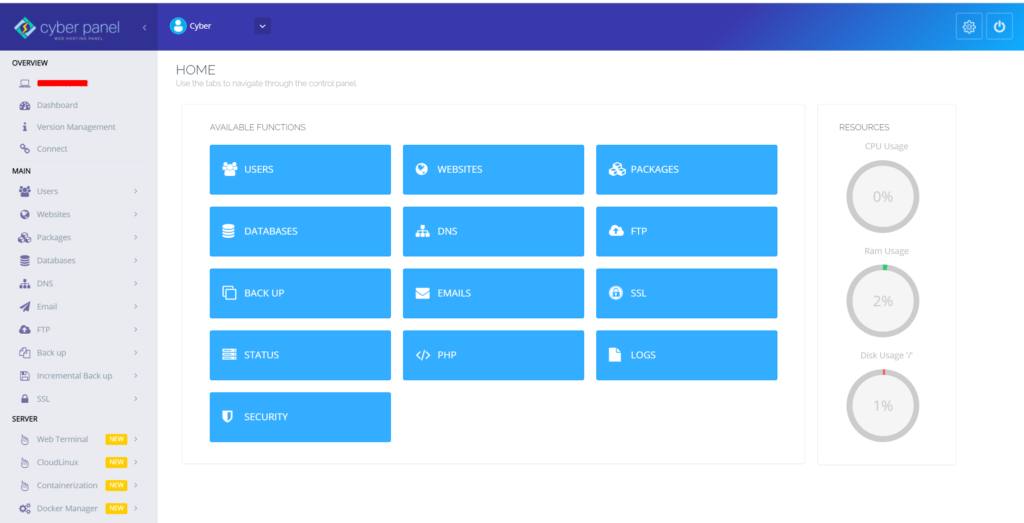
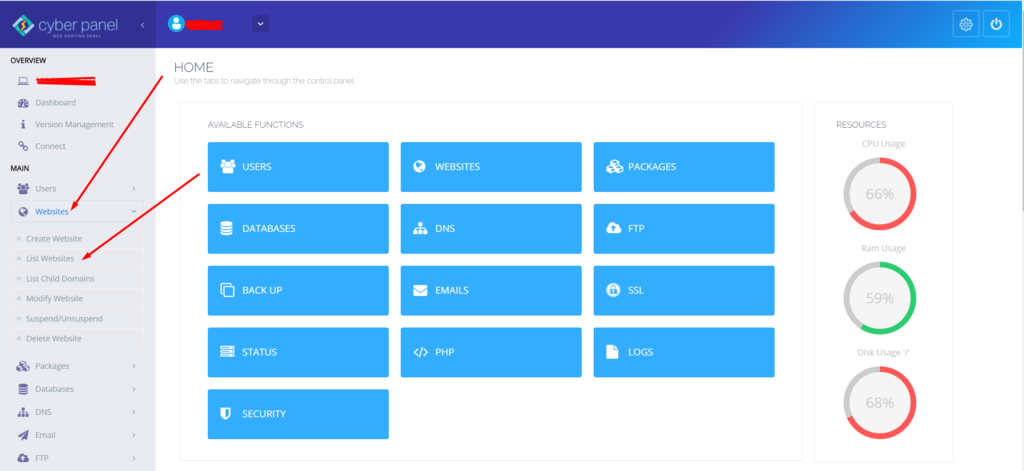
After login, you come to the base page, which is the CyberPanel dashboard. On the dashboard, you can see a sidebar on the left side, in this sidebar you can almost the feature of CyberPanel. In the center of the page you see those feature buttons you can access these feature from the sidebar lists or you can access through these buttons. On the right, you can see the Resources bar here you can see CPU usage, Ram usage, and Disk usage in percentage, how much you used the resources.
This is the all I discuss above are belong to the base/dashboard page of CyberPanel. now I’m discussing the sidebar feature list one by one.
CyberPanel Features List details
Sidebar in CyberPanel Dashboard:
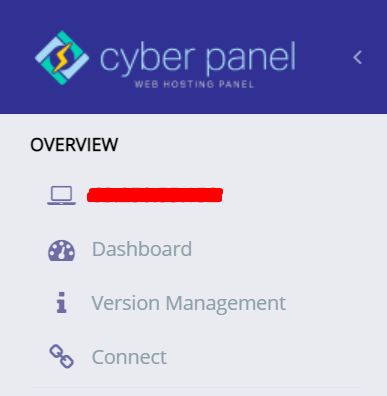
here is the whole sidebar or CyberPanel Dashboard, the Sidebar is divided into three section that is Overview, Main, and Server.
Overview
In the Overview section, there is the general information of your server, On the Top, you can see the IP address(255.255.255.255) that IP is your server IP address. The next button is the Dashboard button, after clicking on this button go to the dashboard. The next button is version management, if you want to know about your CyberPanel version click on this button. The last button in this section is Connect if you want to connect your server to the CyberPanel Cloud then click on this button
On the second section of the CyberPanel dashboard sidebar, you can see a lot of feature dropdown lists,
Users
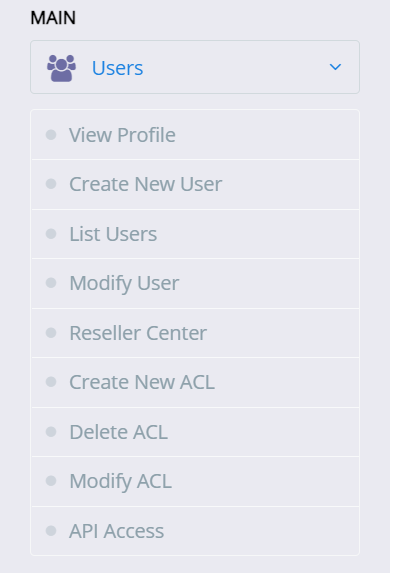
This first feature is Users when you click on Users a dropdown list shown on your sidebar that has a lot more features. View Profile, this feature shows your account details e.g Username, Account ACL, Email, etc. Create New User, if you want to create a new user click on this button. List Users, if you want to list all users of CyberPanel click on this button the all use show on your screen. Modify Users, as the name shows, this button is for update/modify your user’s information. Reseller Center, This feature issue the Reseller account. Create New ACL, This feature is for Creating a new ACL (Access Control List) Delete ACL, if you want to Delete ACL (Access Control List) this feature is for deleting. Modify ACL, if you want to modify or update ACL (Access Control List) click on this. API Access, Enable or disable via this button.
Websites
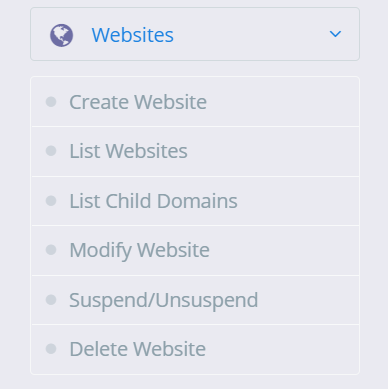
On the Section, the whole information about your websites that you are deployed on this server. Create Website, You can create a new website by clicking on the button List Website, You can list you all website that are deployed on your this server List Child Domains, if you want to List all Child domain you can view all by clicking on this button Modify Website, if you want to update/Modify your website click on this button Suspend/Unsuspend, Delete Website, if you want to delete your website click on this button.
Packages
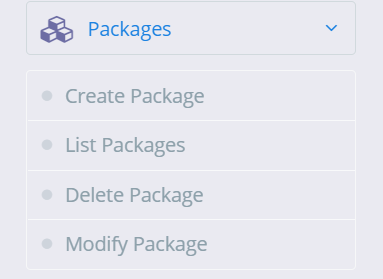
Packages on CyberPanel help you assign resources to an individual website, you must create at least one package before you start creating websites. Create Packages, You can create a package according to your requirement. List Packages, List all Packages. Delete Package, Delete the packages you won’t need anymore. Modify Package, If you feel the need to modify the parameters for the existing package you can do so via modify package page.
Database
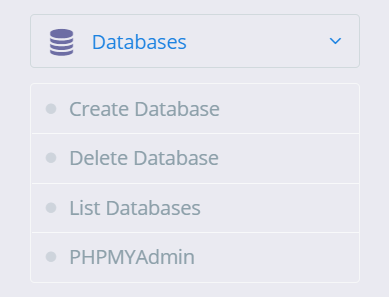
On the Database, you can create, delete, list, and access your database Create Database, if you want to create a new database click on this button Delete Database, On this button, it will delete the database List Database, On this button it will list the database after selecting the website PHPMyAdmin, if you want to access your PHPMyAdmin click on this button.
DNS
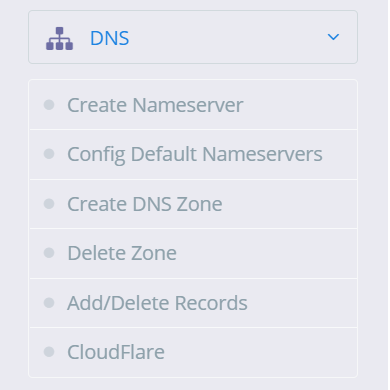
On this Button the whole informationabout DNS(Domain Name Server) Create Nameserver, You can create a NameServer according to your requirement via this button. Config Default Nameservers, Configure Nameserver via this Button Create DNS Zone, Before you can use the “ADD/MODIFY DNS Records” page you have to create a DNS zone first, this is the first step to start using the DNS server. Delete Zone, Once the DNS zone is created you can delete the zone using this button. Add/Delete Records, Once the DNS zone is created you can add or delete records using this button. Cloudflare, In version v2.0.0, CyberPanel has added the ability to synchronize DNS entries between Cloudflare and CyberPanel DNS on your own server
Email
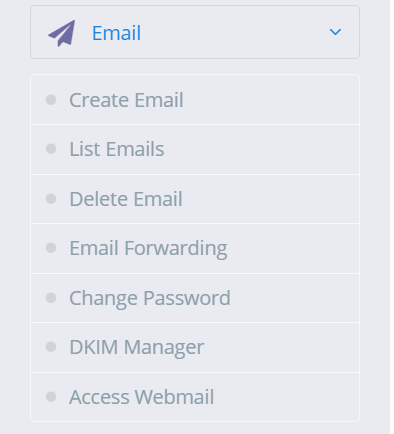
In this section, you can create, list, delete email, etc, Create Email, if you want to create a new email then click on this List Email, This button is for List all Email created on the website. Delete Email, if you want to delete Email click on this button Email Forwarding, ChangePassword, if you want to update or change the password of your email click on its button DKIM Manager, access DKIM manager through this button Access Webmail, access Webmail(Rainloop) through this button
FTP
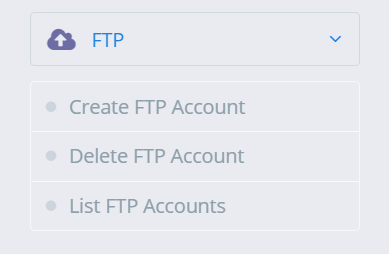
Create FTP Account, click on this button to create a new FPT account Delete FTP Account, if you want to delete an FPT account click on this button List FTP Accounts, This button is for List all FTP account
Backup
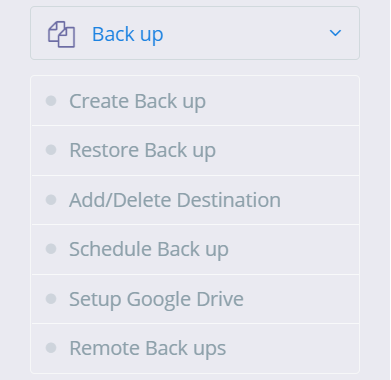
Taking complete backup of a website account is simple. Create Back up, If you want to create a backup click on this. Restore Back up, Backup restore only works with backups generated through the backup generation tool in CyberPanel. Add/Delete Destination, if you want to Add or Delete Back up Destination click on this Schedule Back up, if you want to schedule your website’s backup then click and produce. Setup Google Drive, This feature is for Google drive one-click backup Remote Backups, this feature is for Remote backup
Incremental Back up
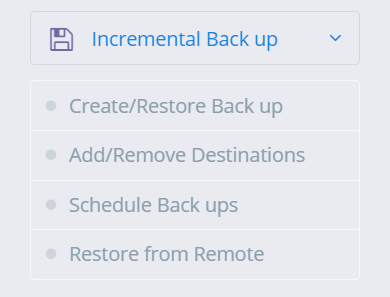
CyberPanel version v1.9.1 adds supports for incremental backups, Local, SFTP, S3 backup Create/Restore Back up, you can create a local or remote incremental backup. Add/Remove Destinations, From this button, you can directly go to backup destinations. Schedule Backups, if you want to schedule your website’s backup then click and produce. Restore from Remote this feature is for Incremental Remote backup
SSL
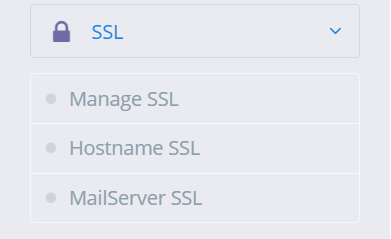
Manage SSL, If you want to Manage SSL click on this button and manage Hostname SSL, If you want to issue Hostname SSL you can issue it via this button MailServer SSL, this button is for Mailserver SSl
Server
The third and last section of CyberPanel sidebae is server.
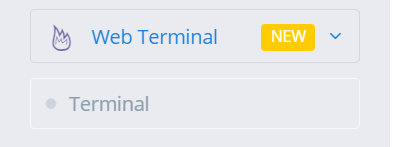
Web Terminal:
CyberPanel v1.9.2 onwards has a web terminal (to access your server SSH). However, in some browsers, you might not be able to use Web Terminal with default self-signed SSL. In that case, just set up CyberPanel on SSL. Now access CyberPanel using that domain.
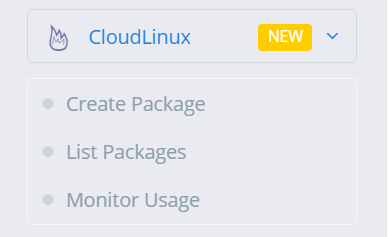
Cloudlinux
CloudLinux and CageFS is available with CyberPanel v.1.8.6, but before using any of its features, you need to convert your operating system to CloudLinux OS. Use the commands below to convert your server to CloudLinux OS. Create Package, List Packages, Monitor Usage,
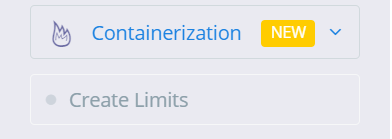
Containerization
Containerization feature (v1.8.0 and above required, currently only CentOS is supported) offers to limit website resources and have no link to our Docker Manager feature. With containerization you can limit various system resources for a website, groups are used on the back end to enforce these limits. You can limit:
CPU Usage.
Memory Usage.
Network Usage.
Disk Usage (IO and IOPS)
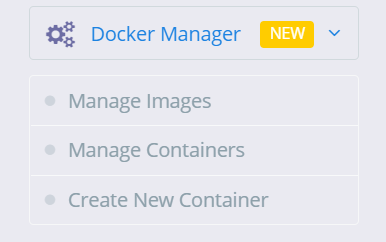
Docker Manager
CyberPanel gives you the ability to manage your Docker container and images the easy way. Some of the exciting features of CyberPanel Docker Manager:
Search and pull images from Docker Hub (Along with tags).
Prune the system.
Create Container from available/pulled images.
List and manage container that includes:
Start/Stop Containers.
View Logs.
Export the file.
View Processes inside the container.
Delete Containers.
Re-create containers.
Manage Images, Manage Containers, Create New Container,
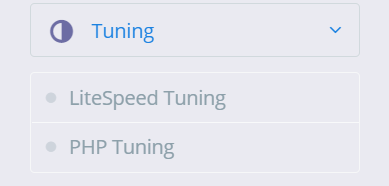
Tuning LiteSpeed Tuning, PHP Tuning,
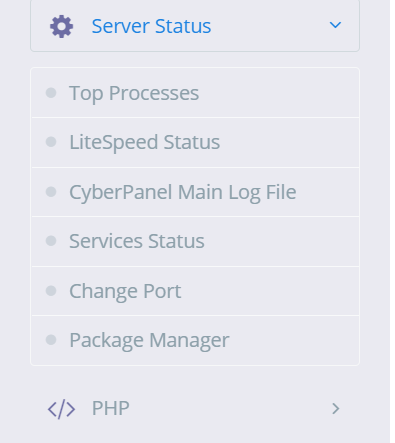
Server Status
This feature is for check your server status and maintains it. Top Processes, from this feature you can check Top process. LiteSpeed Status, from this feature you can LiteSpeed status CyberPanel Main Log File, from this feature you can check CyberPanel Mail log files Services Status, from this feature you can check your servers Status Change Port, if you want to change your port then this feature is for that Package Manager, from this feature you can access your package manager
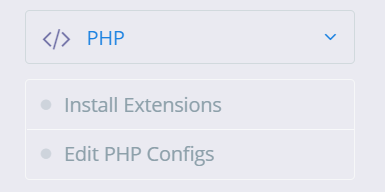
PHP
Install Extensions, if you want to install extensions e.g. redis etc extension you can install via this option Eidt PHP Configes if you want to change or configure your PHP version or anything else then you can change from this option
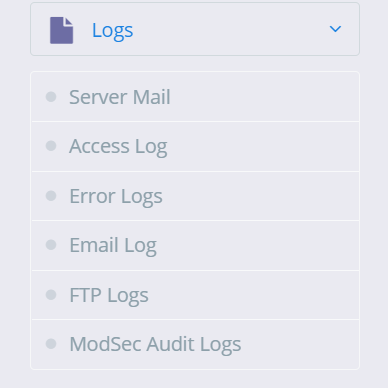
Logs
This is main featuer of CyberPanel. if you want see your server log you can watch from the option you can see: Server Mail, Access Log, Error Logs, Email Log, FTP Logs, ModSec Audit Logs,
Security
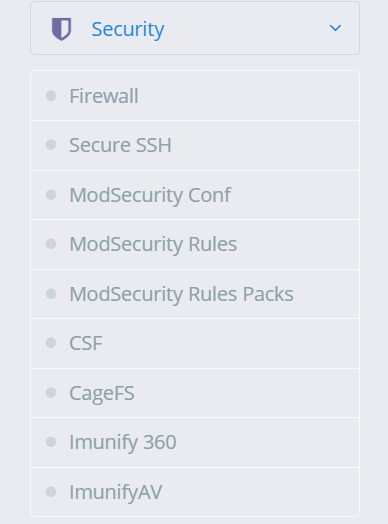
This feature is for your server security. there is a lot of more feature in this. Firewall, you can stop, start, reload, and add/delete firewall through his option Secure SSH, Securing SSH is one of the most important tasks of a system administrator. CyberPanel allows you to change SSH port, disable root login and save your SSH keys. ModSecurity Conf, this feature is for ModSecurity configuration. The ModSecurity Rules, if you want to add/remove update or anything else with ModSecurity Rule you can from this option For the ModSecurity Rules Packs, you can check the ModSecurity Rule pack from this option. CSF, You can configure CSF(ConfigServer Security & Firewall) from this button CageFS, you can enable/disable CageFS from this button Immunity 360, you can enable/disable Imunify 360 from this. ImunifyAV, you can enable/disable ImunifyAV from this.
Mail Settings
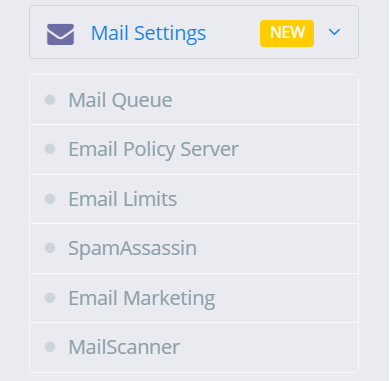
This feature is related to your emails. Mail Queue, If you want to see your mail Queue(pending mails) you can see. Email Policy Server, this feature s for Email policy. Email Limits, this feature is for email limits SpamAssassin, you can Install SpamAssassin through this feature. Email Marketing, this feature is for Email Marketing MailScanner, If you want to install or remove MailScanner you can from this feature.
Manage Services
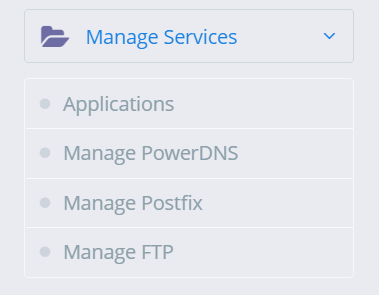
This feature is related to your server Service and application that you can install and check status. Applications, you can install and uninstall applications from this feature. Manage PowerDNS, PowerDNS is the service you can check this form this option And Manage Postfix, you can check postfix service form this option Manage FTP, you can check FTP form this option
Plugins
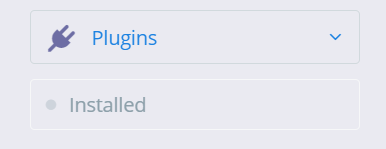
You can install new plugin and uninstall installed plugin from this feature.
How to change time zone on Linux server using command line?
In this article, we will know How to change time zone on a Linux server using command line. This is a very easy and a few steps process so follow along to change your time zone according to your need.
The Time zone is the standard time for any specific region. The server time zone is a basic and one of the important things. Server time zone set while installing and setup server. Sometimes we need to change our server time zone according to our requirements. There are many ways but here we will go through command line one. This is one of the easy ways while using Linux.
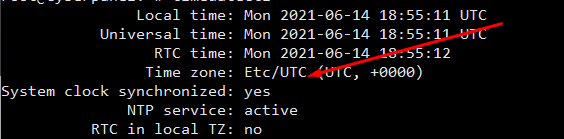
Before changing your server time zone first of all you must know what is the current time zone of your server to do so you just need to run a very simple command. This command is available in all Linux flavors.
open terminal and run:
$ timedatectl
How to check Current TimeZone of your server?
You can see your current time zone of your server.
2. Set / Change Time zone on Linux Server Using Command line:
Before changing your time zone first of all you must have to know about the time zone you want to set. Like if you want to set somewhere in Asia. you must have to know about your region and cit. Now, how you can do it.
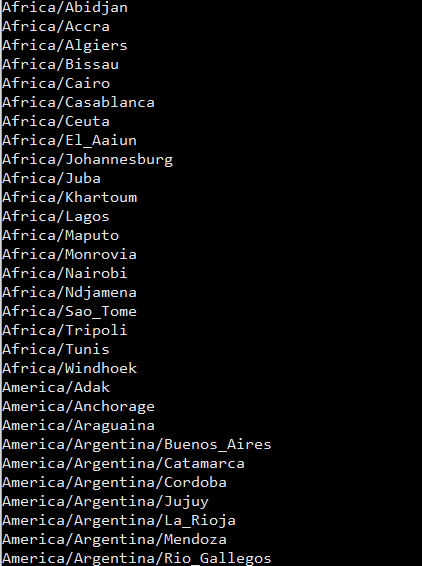
For this there is a command to list all time zones:
$ timedatectl list-timezones
List all time zones
Select your required time zone from the list and add it to this cmd.
timedatectl set-timezone “you time zone”
Make sure that you are login from root account if not use sudo with this.
$ sudo timedatectl set-timezone <your specific time zone>
set time zone
After running this run the timedatctl again and verify if time zone updated or not.
$ timedatectl
Now you can see time zone that you set using above methode.
NOTE: Time zone is one of the core important things many features and services depend upon it so before doing anything make sure that you understood all. moreover, you just need a reboot to apply a new time zone on all servers.
A lot of CyberPanel user uses Rainloop to handle their email. Rainloop is an internal email solution with CyberPanel. Here in this article, we will discuss how you can access Rainloop webmail in CyberPanel?
Rainloop is an efficient memory webmail solution. it is a fast, simple, and modern web-based client email client. Rainloop is the email solution that comes with CyberPanel. It has an amazing user interface. Not only the interface also works great as any other email services.
This article is specifically about access rain loop webmail in CyberPanel.
Follow these steps Access Rainloop Webmail in CyberPanel:
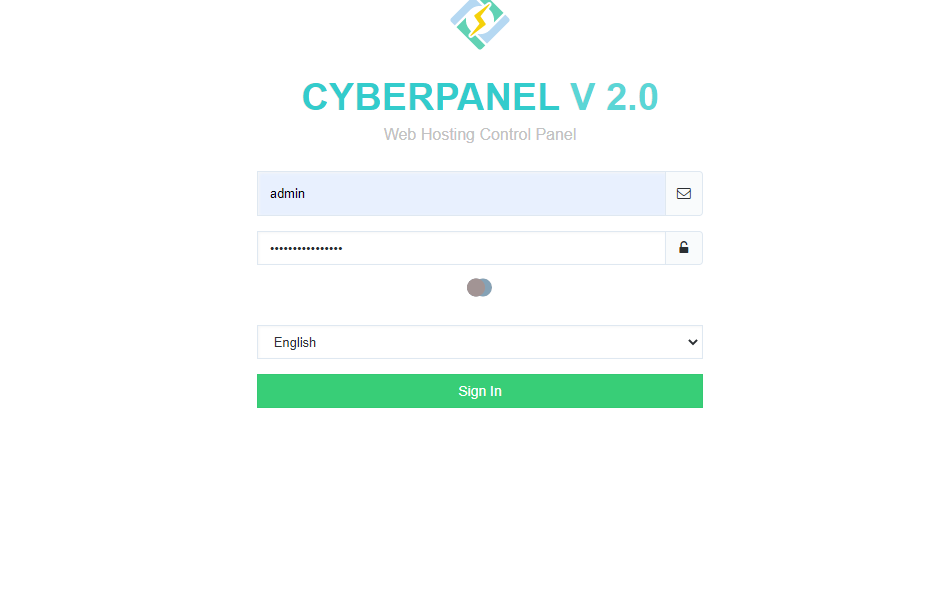
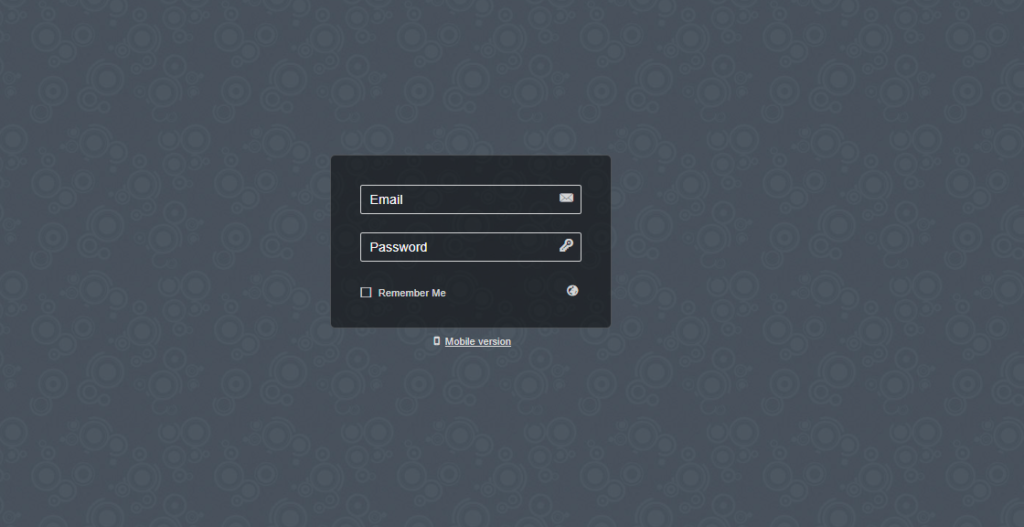
First of all, you need to log in to the CyberPanel dashboard. For this, you must have a username and password (admin or non-admin). Visit your the server IP or hostname with port 8090 to login to cyberpanel.
https://<ip/hostname>:8090
CyberPanel Login
2. Create and Email to Login:
Here you can read How to create email account. After creating mail keep these records so you can use to login.
3. Access WebMail:
To access webmail simple go to the Email->Access WebMail. you will be redirected to the link:
if you want to change Language, Layout, Default Text Editor, Message on Page, Notifications, etc settings. Login into rainloop admin dashboard and change there.
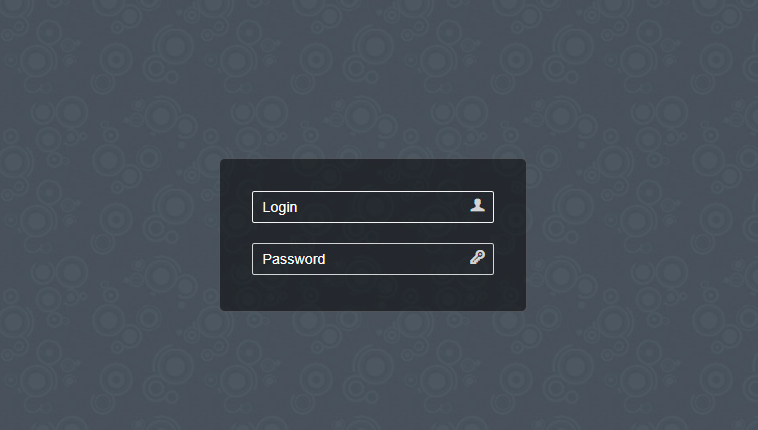
Sometimes we need to log in to the rainloop dashboard to do some configurations. Here in this article, we will tell you how to log in to rainloop admin dashboard?
Rainloop is an efficient memory webmail solution. it is a fast, simple, and modern web-based client email client. Rainloop is the email solution that comes with CyberPanel. It has an amazing user interface. Not only the interface also works great as any other email service.
HTTP stand foe Hypertext Transport Protocol. When you enter http:// in your address bar in front of domain, it tells the browser to connect over HTTP. HTTP use TCP(Transmission control protocol), generally over port 80, to send and receive data packets over ther web.
What is HTTPS?
HTTPS stands for Hypertext Transfer Protocol Secure (also referred to as HTTP over TLS or HTTP over SSL). When you enterhttps://in your address bar in front of the domain, it tells the browser to connect over HTTPS. Generally sites running over HTTPS will have a redirect in place so even if you type inhttp:// it will redirect to deliver over a secured connection. HTTPS also uses TCP (Transmission Control Protocol) to send and receive data packets, but it does so over port 443, within a connection encrypted by Transport Layer Security (TLS).
Redirect from HTTP to HTTPS
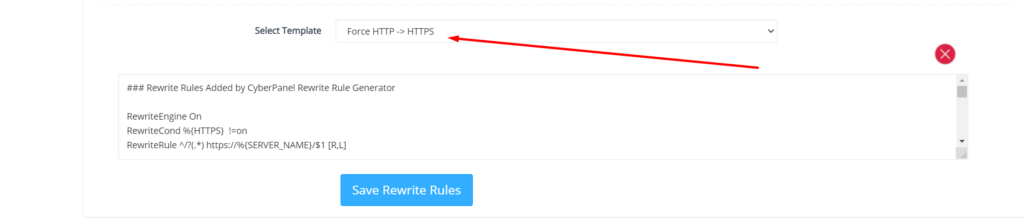
if you forcefully redirect your website HTTP to HTTPS in Cyberpanel, you will need to add a rewrite rule to that website in order to have it automatically forward to HTTPS instead of HTTP.
In CyberPanel you can forcefully redirect HTTP to HTTPS website using rewrite rules.
To add this:
Force redirect HTTP to HTTPS website in CyberPanel:
Select Websites on the left menu
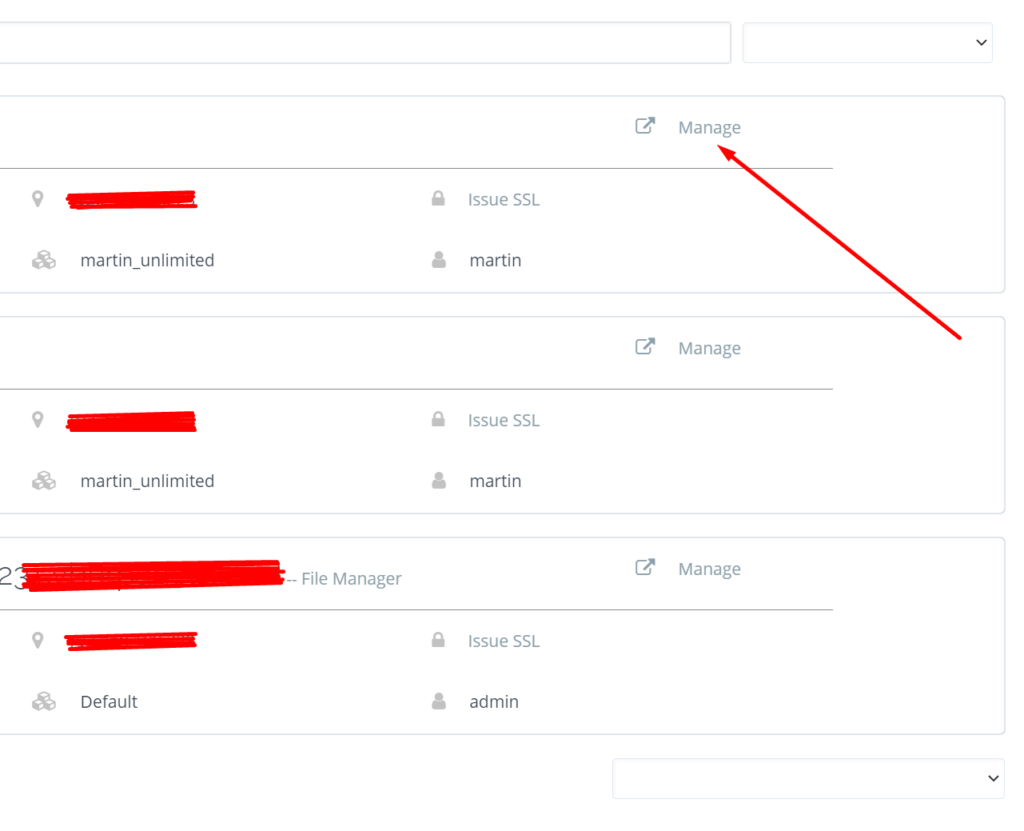
2. Choose the SSL enabled website from the list
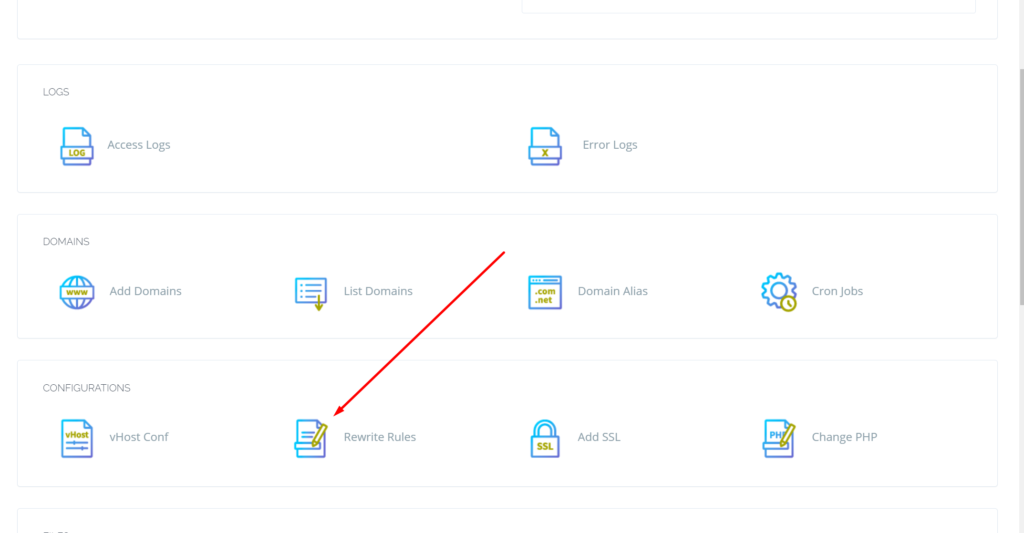
3. Select “Rewrite Rules” in the Configuration section
How to add ZeroSSL on your site? Free SSL for your website
You always need a secure URL for your website. Secure means your website will be accessible with SSL(Secure Sockets Layer). It’s very important to access your site on HTTPS instant of HTTP. Today I will tell you how you can add ZeroSSL to your website. ZeroSSL is totally free for your website.
ZeroSSL allows the free start of three domains. You can add free-of-cost SSL to your first three sites after those you have to buy if you want to issue SSL for more sites.
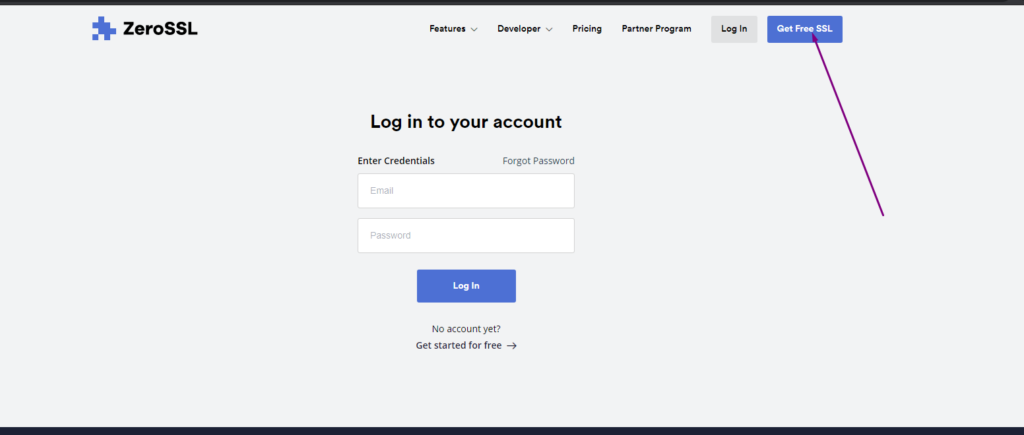
In first step you have to create an account on ZeroSSL website. For this go Here.
Here on this page you can see the Get Free SSL button click on that and visit to registration button.
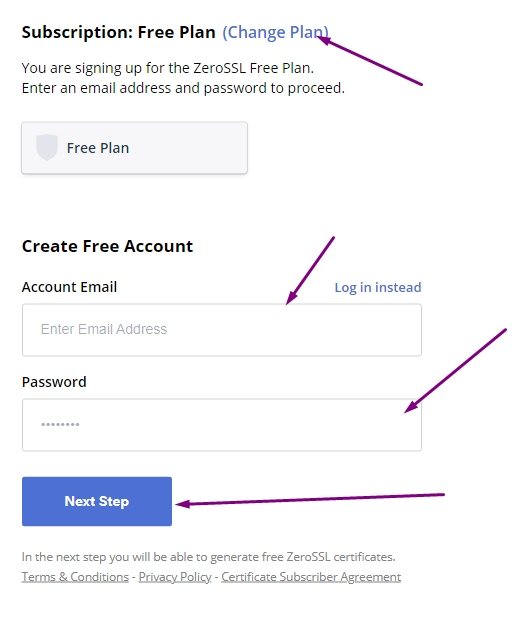
On this page you have to provide some information to signup.
Subscription Plan
Email Account
Password
After providing these all press to the Next Step button.
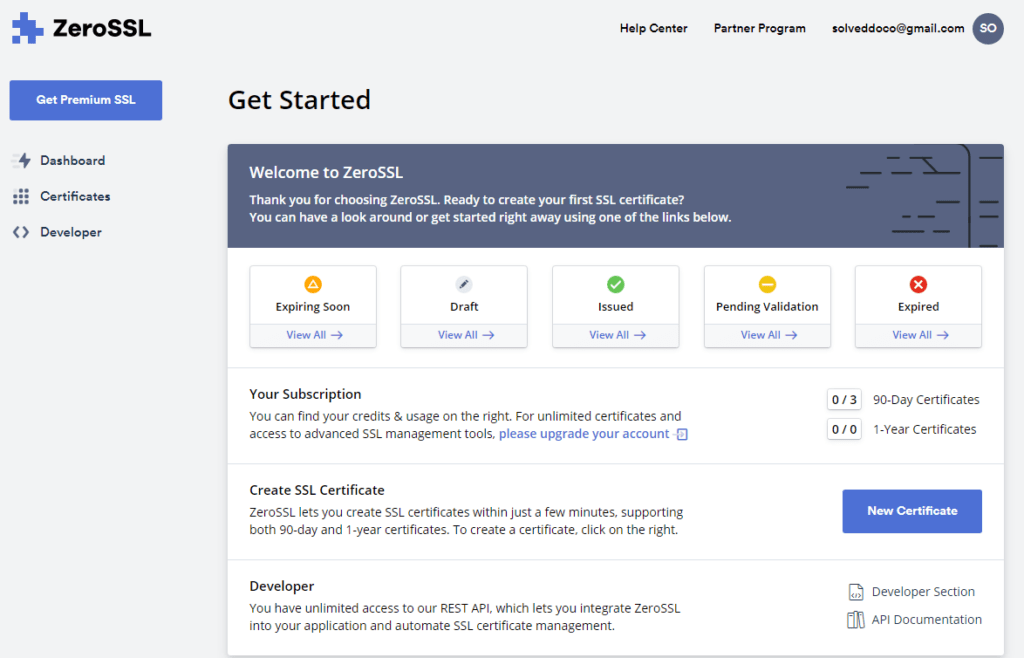
Once you press this button you can see the ZeroSSL dashboard.
Create New SSL Certificate:
Here on Dashboard you can see New Certificate button press this button present in the above image.
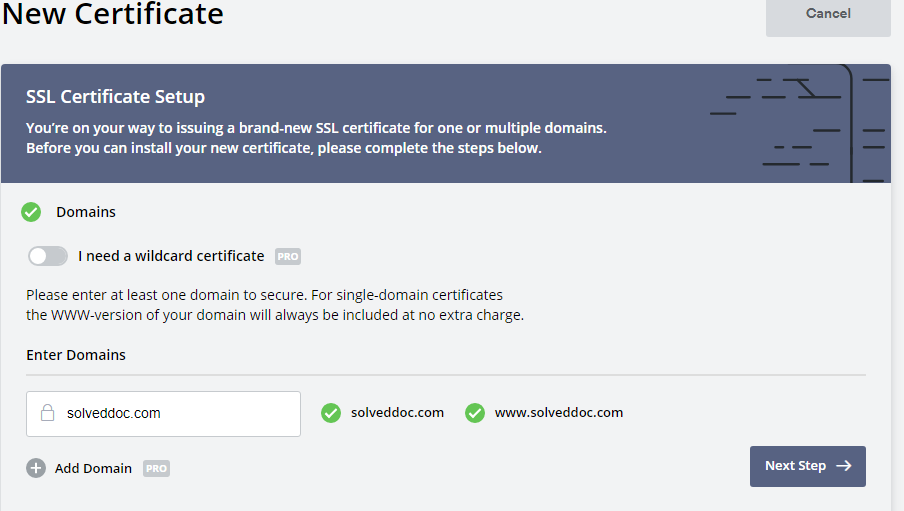
On the next page you have to provide following information:
Enter Domain (Enter your domain name for which you want to issue SSL)
You will see this Green ticks for a valid domain name.
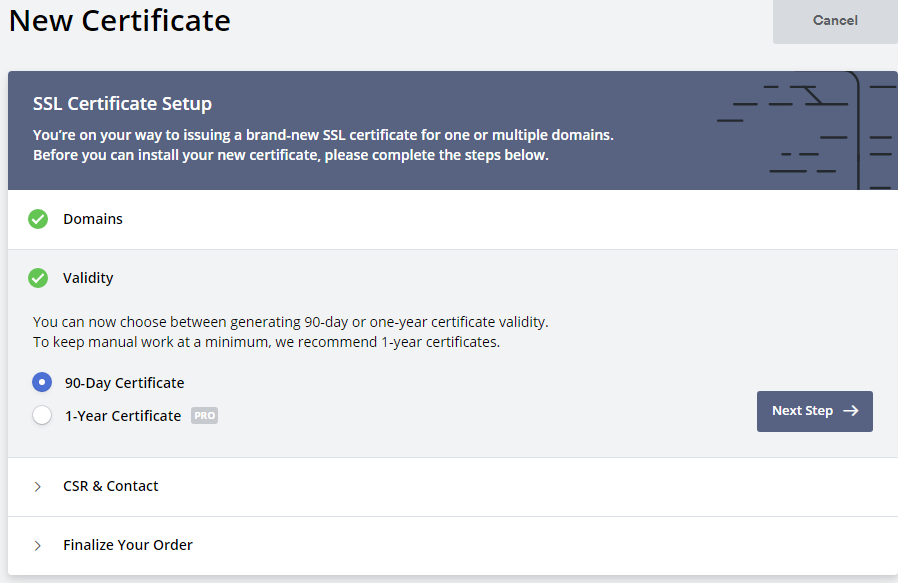
2. Validity (For how many time this ssl is valid )
Usually for 90 days its free and if you want for 1 year you have to buy.
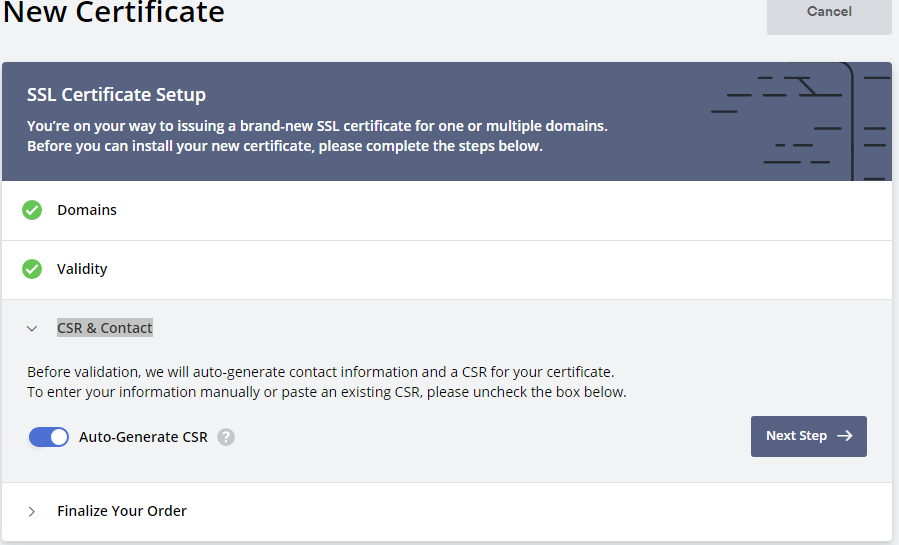
3. CSR & Contact
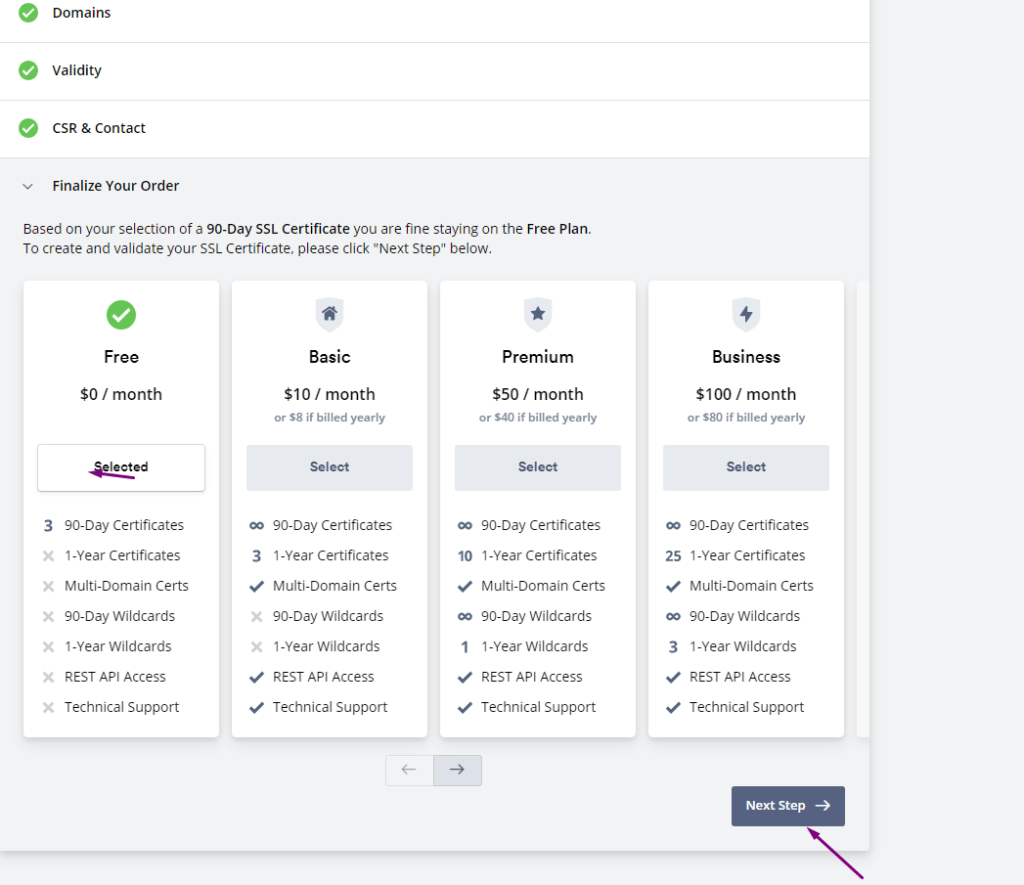
Finalize Your Order (you have to select )
You have limit to issue three free ssl to your domain. Once the process of plan selection done now you have to verify your domain.
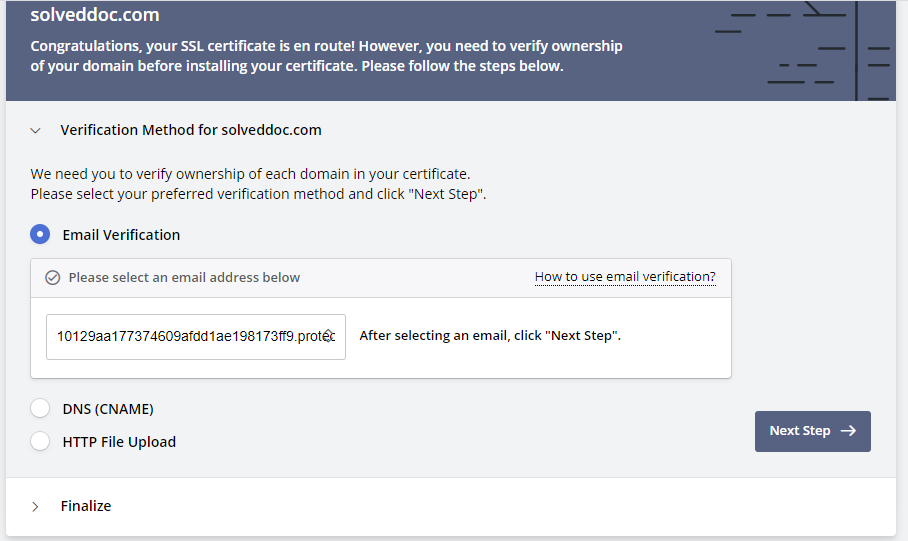
Verification Method:
ZeroSSL allow three types of verification:
Email Verification
DNS (CNAME) HTTP
File Upload
You can chose any one you are comfortable with. If you have this email then use it, or update DNS records according to the second or upload the file to dns.
Verification Method:
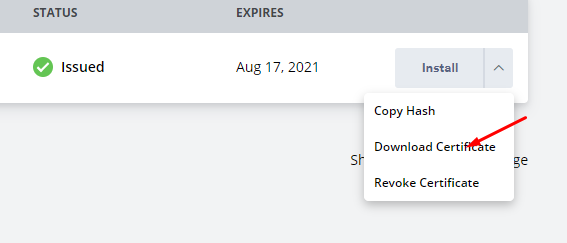
After this you will get a option to download SSL. you can download crteficate.
download SSL
Add ZeroSSL to your Website?
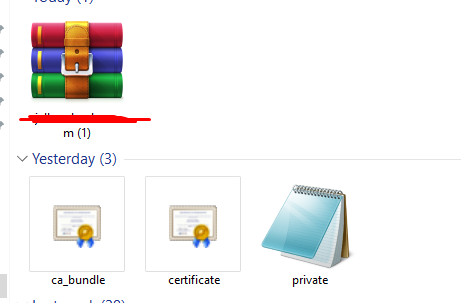
When you got your SSL file there must be three files after extracting. ca_budle, certificate, private key
Add these files values according to the require mint on your site.
A lot of users install ImunifyAV but after some issue, if they want to uninstall they do not know how to do this. Here in this article, we will tell you How To Uninstall Or Stop ImunifyAV?
ImunifyAV – an intelligent antivirus and security monitoring tool for websites with one-click automatic malware cleanup, domain reputation monitoring, and blacklist status check. Read more about ImunifyAV
A lot of users install ImunifyAV but after some issue, if they want to uninstall they do not know how to do this. Here in this article, we will tell you How To Uninstall Or Stop ImunifyAV?
In this artical we provide the way where you can able to uninstall or Stop ImunifyAV.
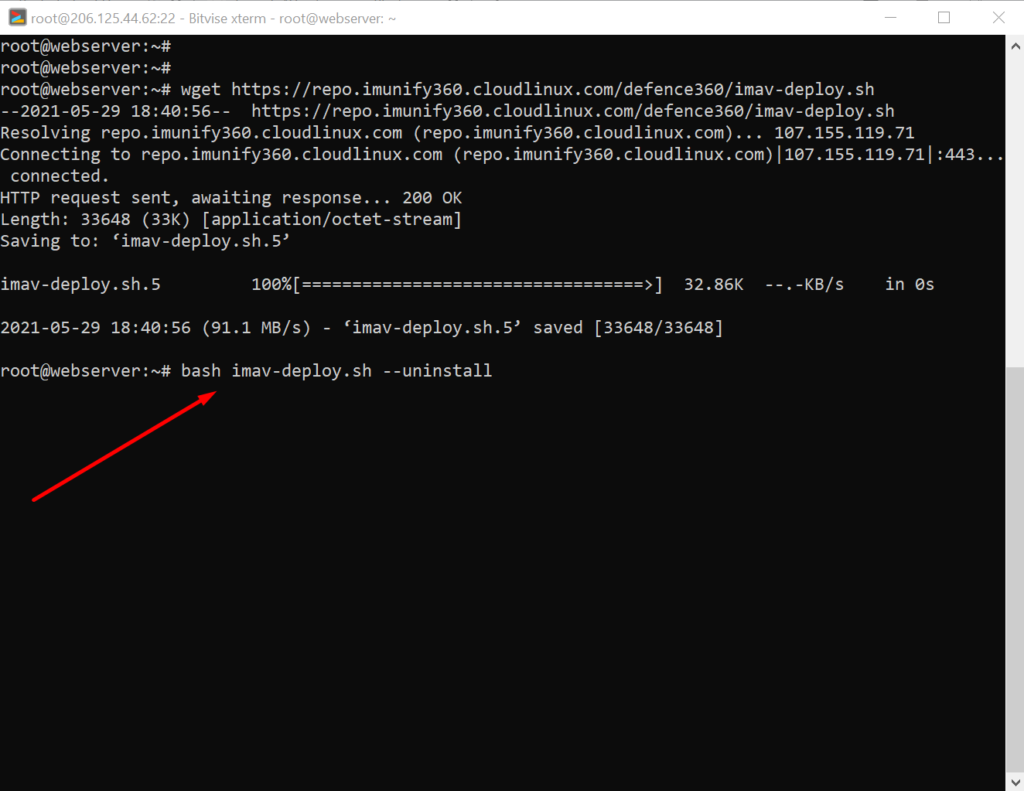
Uninstall ImunifyAV:
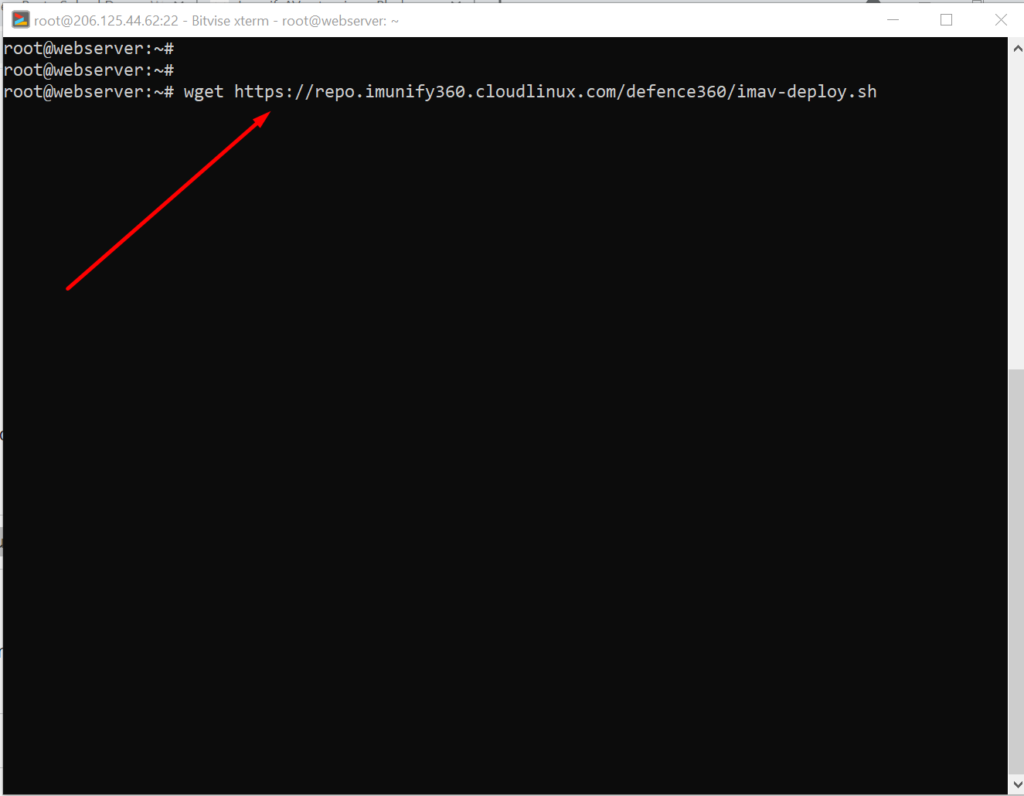
To uninstall ImunifyAV, you need to first download the imav-deploy.sh script with the following command:
How to solve the can’t upload the file on file manager issue in CyberPanel?
if you are uploading a file on file manager in CyberPanel. and getting some error there. Follow this short solution for can’t upload the file on CyberPanel file manager.
Solution
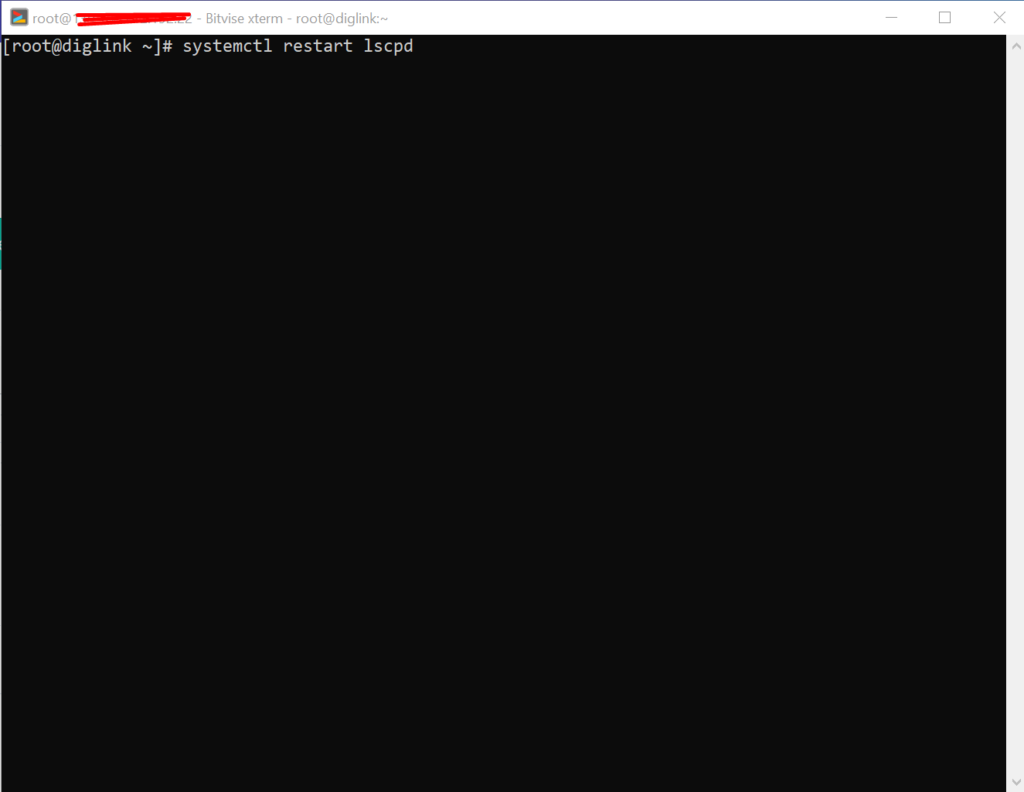
There is very easy and short solution for this issue. Access your root through Bitvise or putty open your terminal(CLI) and run this Command
Systemctl restart lscpd
This simple command will restart all of your CyberPanel services and now if you can try you can easily upload any file but there may be upload limit issue if so you can follow this tutorial to solve that Link below.